If it is happening now, call now
Emergency Water Extraction, On Call 24/7 in Georgetown
The short version: call (437) 475-8501 now. A technician is on site within 1 hour anywhere in Georgetown, Acton or Glen Williams, at any hour, with pumps and extractors on the truck. Standalone extraction typically runs $500 to $2,500, and every visit includes free moisture mapping so you know what the water actually did.
What counts as an extraction emergency
- A flooded basement, from any source, any depth
- A burst or frozen pipe still running or freshly stopped
- A failed sump pump during rain or melt
- An appliance failure: water heater, washing machine, dishwasher
- Water arriving through the foundation during a storm
The common thread: standing water, actively soaking into your house. Every hour it stands, it climbs drywall, saturates subfloor and gets closer to the 24 to 48 hour window where mold takes hold. Extraction is the single most time-sensitive step in all of water restoration, which is why it gets its own page and its own promise: we are on site within 1 hour, around the clock.
What happens in the first hour
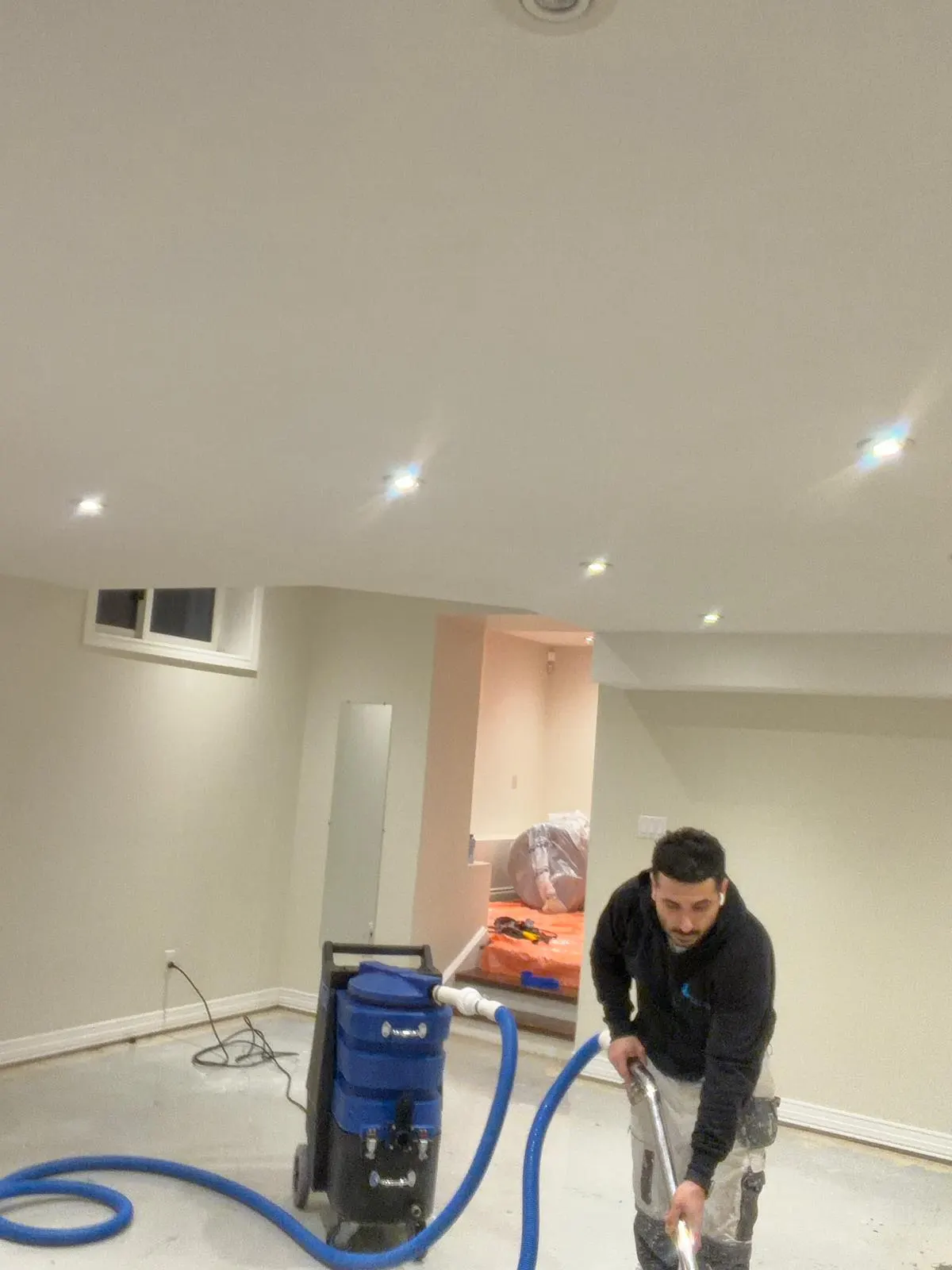
You call, a person answers, and while the truck rolls we tell you exactly what to do: where the shut-off likely is, whether the power should go off, what to move first. On arrival we stop the source if it is still flowing, then pump and extract standing water from floors and carpet. Before we leave, moisture meters map how far water travelled into walls and flooring, photographed and logged for your insurance file whether or not you file a claim.
Being based on Guelph Street in Georgetown is what makes the hour real. Extraction response from outside town means water stands for two or three hours longer, and standing water is the whole problem.
Extraction is step one, not the fix
Honesty requires saying this plainly: pumping out the visible water saves the situation, not the structure. The water you could see is matched by water you cannot, held in drywall, framing, subfloor and insulation, and it does not evaporate on a helpful schedule. That is what the full drying and restoration that follows extraction exists for: machine drying to verified dry-standard readings, then repair of what the water ruined. We will show you the moisture map and let the numbers make the argument; when a floor genuinely needs no drying, we say so and leave.
Why the clock changes the bill
Water damage is priced by what the water reached, and what it reaches is a function of time. In the first hour, water sits on surfaces and the loss is mostly cleanup. By the first evening it has climbed into drywall and underlay, and the job now includes removal and machine drying. By the third day, mold is plausible and the scope can double again. The same flooded rec room can be a $1,500 job, a $6,000 job or a $12,000 job depending on nothing but when the extraction started. We publish that fact because it is the entire argument for calling at 2 a.m. instead of waiting politely for morning: the overnight call is the cheaper one.
While the truck is on its way
- Shut the main water valve if a pipe or appliance is the source.
- Cut power to the flooded area if the panel is dry and reachable.
- Move irreplaceables up and out first.
- Stay out of the water if it is discoloured or smells of sewage.
- Photograph before you move anything.
- If this keeps happening, read Halton Region'sbasement flooding prevention material once the emergency is over.
Emergency extraction questions
Do you really answer at 3 a.m.?
Yes. Water emergencies do not book appointments, so neither do we. The phone is answered by a person around the clock, and the 1 hour response commitment applies at night, on weekends and on holidays. Floods have no office hours and a flooded basement at 3 a.m. is worth more sleep lost to us than to you.
How much water is too much to shop-vac myself?
A puddle from an overflowed sink, go ahead. Anything covering a floor, anything that has reached walls or carpet, or any amount of grey or foul water is past DIY territory: a shop vac moves litres while the water is moving into your drywall by the minute, and it does nothing about what has already soaked in. If you are debating it, that is usually the answer.
My sump pump died in a storm. Can you help before the rain stops?
Yes, and call sooner rather than later, because storm nights are when every restoration company in the area gets stretched. We pump down the water, get a temporary pump running if yours is dead, and stage drying as soon as inflow stops. Dead sumps in summer storms are one of the most common causes of basement flooding in the newer subdivisions.
Can you extract from crawlspaces and cold rooms?
Yes. Low-clearance spaces take smaller equipment and more patience, but leaving water under the house is not an option: crawlspace moisture migrates up into the floor system and shows up later as cupped floors and musty rooms. We pump, extract and set drying appropriate to the space, and we check these spaces on every basement call because water hides there first.
What does emergency extraction cost on its own?
Typical standalone extractions run $500 to $2,500 depending on volume and access. Every extraction visit includes moisture mapping, so you will know exactly what soaked in and can make the drying decision with numbers instead of hope. There is no obligation to continue to drying with us, though most people do once they see the readings.