Health hazard response, 24/7
Sewer Backup Cleanup for Georgetown and Halton Hills
The short version: stay out of the water, keep kids and pets off the level, stop running taps and toilets, and call (437) 475-8501. We extract, disinfect and dry under proper containment, typically $2,000 to $7,000 for a basement backup, and if you carry the sewer backup endorsement your insurance usually pays for it.
Why sewage ends up in Halton Hills basements
Two culprits, and the fix depends on which one you had. The first is storm overload. When a summer cell parks over town, the kind of event that dropped 79 mm on Halton Hills in one day in July 2024, more water enters the sewer system than it was sized to move, the system surcharges, and the overflow exits at the lowest connected opening it can find. In a basement, that is the floor drain. The second culprit is slower: tree roots working into the private sewer lateral between your foundation and the street, narrowing it year by year until a normal Tuesday load becomes a blockage. Older streets with mature trees, which describes most of central Georgetown and Acton, see the root version constantly.
Either way the result in your basement is the same, and it is a biohazard before it is a mess.
The cleanup protocol
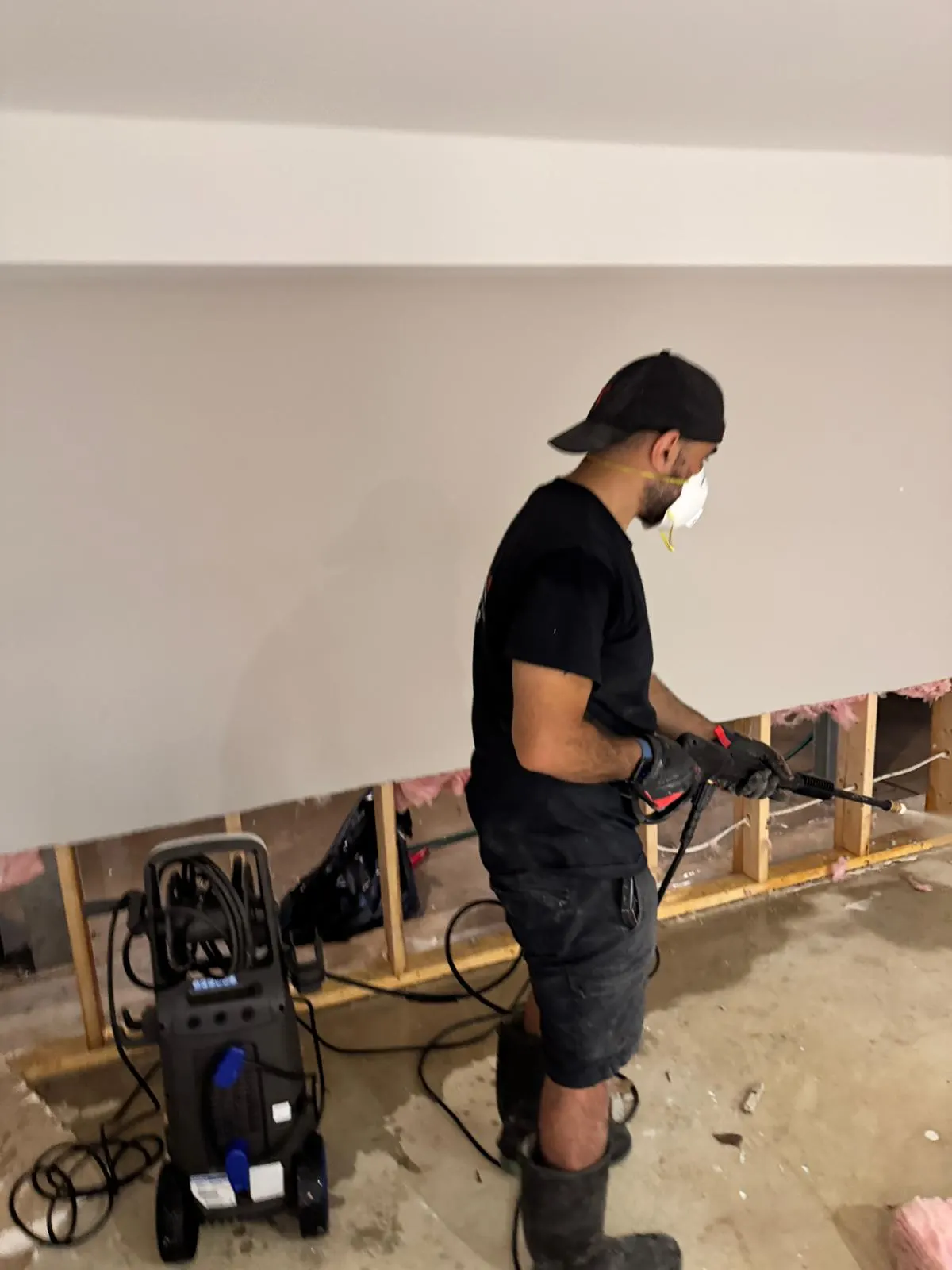
Contain and protect. We isolate the affected area, work in protective equipment, and set up so contamination does not get tracked through the house.
Extract and remove. Sewage and solids are pumped and removed. Porous materials that contacted it, carpet, underlay, cardboard, the lower portion of affected drywall, are cut out and bagged. We are honest about this on the phone: some of your things will not be salvageable, and pretending otherwise wastes your settlement.
Clean, disinfect, verify. Every surviving surface gets cleaned and treated with hospital-grade disinfectant, then the structure is dried and checked with meters, exactly as in a clean water loss, plus verification the drain is flowing.
Document for the claim. Photos before, during, after, plus a disposal inventory of what was removed. If you carry the endorsement, this file is what gets it paid.
Grey water and black water: why the category changes the job
The restoration trade sorts contaminated water into categories, and the category drives the scope. Grey water, from a washing machine drain or a sump failure, carries some contamination and needs disinfection but spares more of the room. Black water, anything from a sewer or containing sewage, is treated as fully contaminated: everything porous it touched is assumed compromised, full stop. One practical consequence surprises people: water that started grey becomes black if it sits, because standing contaminated water grows its own biology within a day or two. It is one more reason the cleanup clock matters, and one more reason we answer at night. After cleanup, a camera run down the lateral tells you whether roots, a sag or the municipal side caused the backup, which is the fact that decides your prevention spend.
What does sewer backup cleanup cost?
A typical Georgetown basement backup, cleanup, disinfection, tear out of contacted porous materials and structural drying, runs $2,000 to $7,000. Finished basements with large contaminated areas run higher because more material must come out. Rebuild of removed drywall and flooring is quoted separately. If the backup is insured, we scope with your adjuster so approved and invoiced amounts match.
Make this the last one: valves and drainage
The prevention for the storm-surcharge version is a backwater valve: a one-way flap on your sewer lateral that physically cannot let the street's problems become yours. Halton Region currently subsidizes 50% of the installation up to $1,600 through itsbackwater valve installation subsidy, which turns a roughly $2,000 job into hundreds. If groundwater also finds its way through your walls in storms, the full prevention picture is backwater valves and waterproofing that prevent the next one, and doing them together while the floor is already open is meaningfully cheaper than separately. Our local coverage means the camera inspection, the valve and the cleanup can all come from one truck.
While you wait for us
- Stop using water anywhere in the house: no flushes, no laundry, no dishwasher. It all comes out the same drain.
- Keep everyone, especially children and pets, off the affected level.
- Kill power to the area at the panel if you can do it dry.
- Do not attempt cleanup with household equipment.
- Photograph from the doorway; do not wade in for a better shot.
Sewer backup questions
Is sewage in the basement actually dangerous, or just disgusting?
Actually dangerous. Sewage carries bacteria, viruses and parasites, and it contaminates everything porous it touches. This is a gloves-suits-and-disinfection job, not a mop job. Keep children and pets off the entire level until it is cleaned, and do not run a household shop vac through it, that machine can never be safely used indoors again.
What can be saved after a sewer backup?
Hard, non-porous things: concrete, tile, metal, sealed wood after proper disinfection. What cannot be saved, and we will not pretend otherwise, is anything porous the sewage touched: carpet and underlay, cardboard, mattresses, upholstered furniture, and usually the bottom section of drywall. Insurance settlements expect this, which is one reason the endorsement matters so much.
Why did this happen when nothing is wrong with my plumbing?
Because the blockage or overload is usually not on your property. During intense storms the municipal system can surcharge, and the overflow finds the lowest opening connected to it, which is a basement floor drain. The other common cause is tree roots in the private lateral between your house and the street. A camera inspection after cleanup tells you which one you had, and the answer decides the right prevention.
Does insurance cover sewer backup cleanup?
Only if your policy carries the optional sewer backup endorsement, it is not part of standard Ontario home coverage. If you have it, cleanup and restoration are typically covered to the endorsement limit. If you are reading this on a dry day: call your broker and check, the endorsement usually costs less per year than one hour of what the cleanup costs without it.
Who is responsible for the sewer lateral, me or the town?
In general, the private lateral from your house to the property line is the homeowner’s responsibility, and the municipal side beyond it belongs to the system. Where the blockage sits decides who pays for the pipe repair, which is exactly what the post-cleanup camera inspection establishes, on video you keep. Note that Halton’s subsidy program includes up to $2,000 toward lining a deteriorating private lateral, which softens the bad-news version of that video considerably.
How fast does sewage cleanup need to happen?
Same day, ideally within hours. Contaminated water wicks upward into walls hour by hour, and every centimetre it climbs adds tear-out to the job. Fast extraction and disinfection routinely keeps a $10,000 loss under $5,000. This is the single most time-sensitive job we do.